Lake-effect snow and sub-zero temps punish your garage door. Here's how to winterize weatherstripping, seals, and balance before the deep freeze hits northeast Ohio.
Cleveland winters are no joke. Lake-effect snow off Erie, single-digit temperatures, and freeze-thaw cycles put more stress on a garage door than any other season. For northeast Ohio homeowners, a little preventative maintenance in late fall can be the difference between a door that glides all winter and a snapped spring at midnight in January.
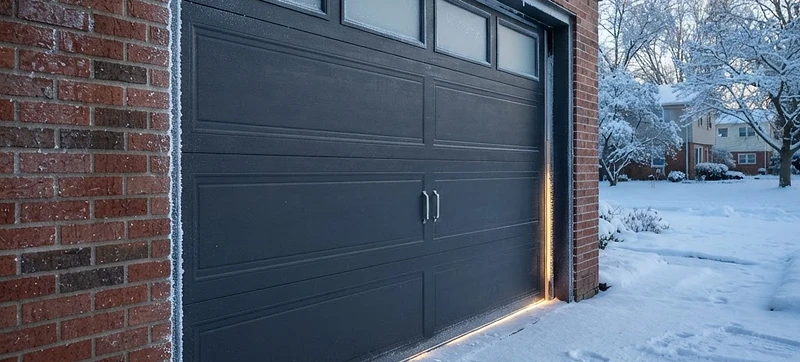
Start with the weatherstripping. The rubber seal along the bottom of the door — called an astragal — hardens and cracks after a few Cleveland winters. When it gaps, cold air, snow, and road salt blow straight into your garage. Press the door closed and look for daylight underneath; if you see any, the seal needs replacing. New astragal is inexpensive and stops drafts that can drop your garage temperature by twenty degrees.
Next, inspect the side and top seals and the section joints. Vinyl and rubber shrink in the cold, so gaps that were tight in October can open up by December. Run a hand along the frame edges on a cold morning — any cold breeze means it's time to replace the stop molding. This is also when mice and other pests look for warmth, so a tight seal protects more than just your heating bill.
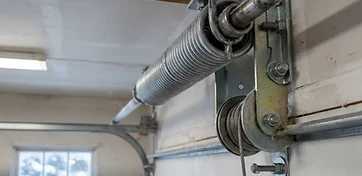
Lubrication matters more in winter than any other time. Cold thickens old grease and dries out rollers, hinges, and springs, which is why doors get loud and sluggish when the temperature drops. Use a silicone or white-lithium spray — never WD-40, which attracts dust and freezes — on the roller stems, hinge pivots, and spring coils. Wipe off the excess so it doesn't collect grit.
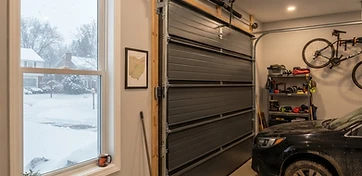
Then run a balance test. Disconnect the opener with the release cord and lift the door halfway by hand. It should stay put on its own. If it crashes down or flies up, the springs are off — and a cold, over-taxed spring is the one most likely to snap. A balanced door also keeps your opener motor from burning out when oil thickens in the cold.
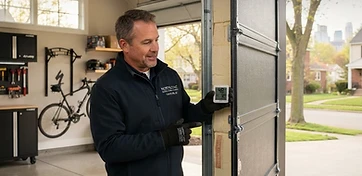
Finally, protect the opener and your access. Test the battery backup so a power outage during an ice storm doesn't lock you out, and keep the photo-eye sensors clean — snow and salt fog can scatter the beam and make the door refuse to close. If anything feels off, don't wait for a breakdown in a blizzard. Call North Coast Garage Door & Security and we'll get your door winter-ready before the deep freeze.
Need help with your garage door?
Our Cleveland team is on call 24/7. Call now or send a request — we'll get back to you fast.